
Blog
Pool Cue Tip Diameter: Choosing a Comfortable Shaft Setup
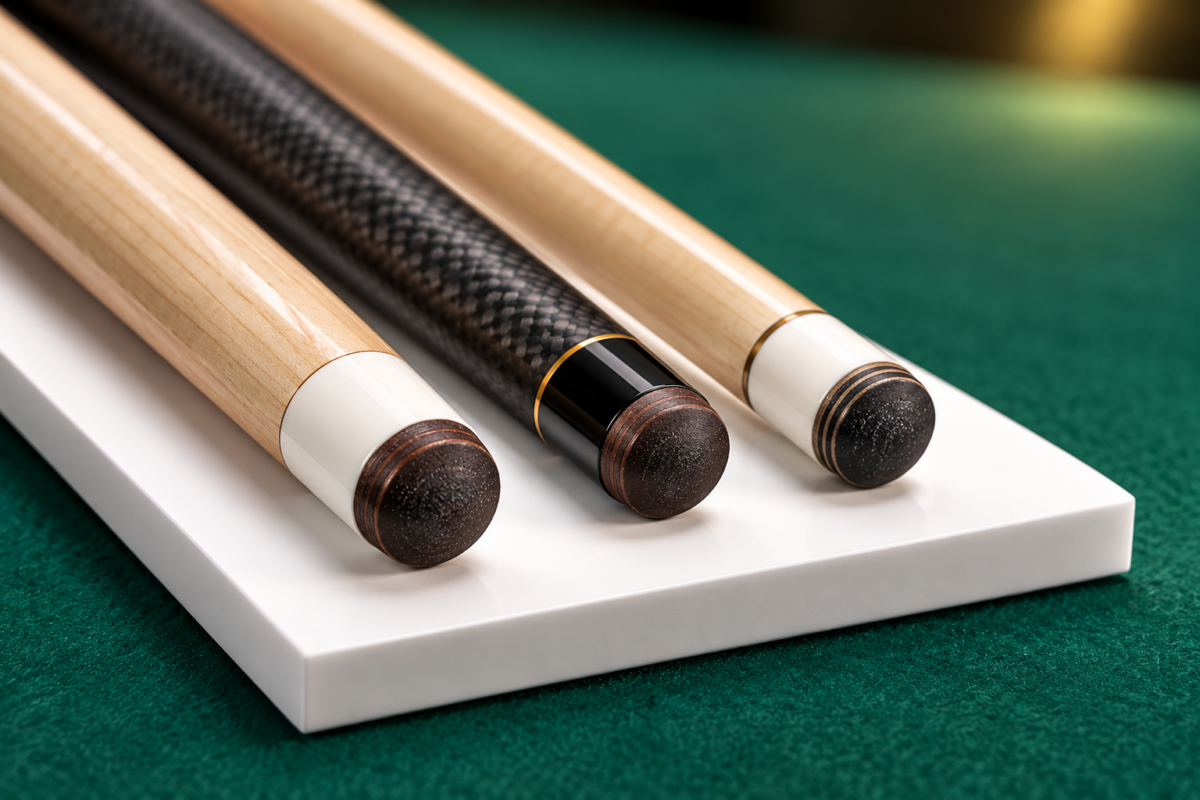
Oct
Pool cue tip diameter is one of the first specifications players notice when comparing shafts. A number expressed in millimeters can seem like a simple shortcut to the right choice. In practice, it is one part of a setup that also includes taper, tip construction, shaft material, length, and the connection to your cue butt.
The useful question is which combination feels comfortable and suits the equipment you intend to use. A smaller or larger listed diameter does not automatically identify the best choice for every player. Starting with your current setup and comparing complete specifications can make the decision more understandable and less dependent on another person’s preference.
Know which measurement you are comparing
The listed tip diameter refers to the width at the tip end, not the diameter of the cue’s joint. Keep those measurements separate when reading a product description. A shaft can have the tip size you want while still requiring a different joint configuration from the one on your existing cue.
Read the complete specifications rather than interpreting one number in a title. For example, Cuetec offers AVID playing shafts identified with different tip diameters while also specifying their joint-face dimensions. That product information illustrates why several measurements may appear together. Each answers a different question about the particular shaft being considered.
Start with a familiar shaft
Identify the shaft you currently use and gather its published specifications where available. If it has been modified, repaired, or fitted with a replacement tip, explain that history. Do not assume its present configuration is identical to the original listing. A useful baseline should describe the equipment you actually hold, not only the model name.
Write down what you like and what you want to explore. Perhaps the shaft feels comfortable through your bridge, or perhaps you want to compare a different profile. Clear observations can help a specialist suggest relevant questions. They are more informative than assuming a particular diameter is reserved for beginners or required for experienced competitors.
Consider taper alongside tip diameter
Taper describes how the shaft’s diameter changes along its length. Consequently, the tip measurement does not fully describe the portion moving through your bridge hand. Review the manufacturer’s taper information and consider the assembled shaft rather than comparing only the width at its end. Similar tip numbers do not establish that two shafts will feel identical.
If you have an opportunity to handle suitable examples, ask what evaluation is permitted and pay attention to the entire movement. Notice comfort and familiarity without treating one first impression as a universal conclusion. When comparing online, describe your existing shaft and ask how the proposed option differs in its published construction and profile.
Keep tip diameter separate from tip characteristics
A product may also describe the tip’s brand, construction, hardness, or supplied shape. Those are separate characteristics from diameter. Read the information carefully so a preference about one feature is not mistaken for a conclusion about another. If the terminology is unfamiliar, ask the retailer to explain exactly what is included with the shaft.
Avoid assuming that a number alone guarantees more spin, control, or accuracy. Cue delivery, contact, practice, and the complete equipment setup remain part of the playing experience. A buying decision is stronger when it rests on an understandable comparison rather than a promise that one isolated specification will produce a particular result.
Compare options with a consistent routine
Where a suitable demonstration is available, use familiar shots and keep the comparison focused. Changing diameter, taper, material, tip, and weight at once can make it difficult to explain what you prefer. A manageable comparison helps you identify the differences that matter instead of collecting impressions from too many unfamiliar setups in one visit.
Keep brief notes about what was tested and how it was configured. Distinguish comfort from a short run of successful shots, and allow for the unfamiliar feel of different equipment. Your goal is to make a choice you can explain, not to prove that the same diameter should be preferred by everyone who plays pool.
Confirm compatibility before ordering
Once an option interests you, verify its joint type, relevant dimensions, length, and intended cue compatibility. Check that the selected variation matches the recommendation you received. A product family may include several configurations, and a photograph does not necessarily show the exact option selected in the order menu.
Ask what to check on arrival and review the current purchase terms before using or altering the product. Do not reshape, sand, or otherwise modify unfamiliar equipment to force it into a preferred specification. Any proposed alteration should be discussed with an appropriate professional and considered alongside the manufacturer’s guidance for that specific item.
Read a product comparison as a complete description
Suppose two shafts appeal to you because they offer different tip diameters. Before deciding that diameter explains every difference, compare the remaining specifications. Note the material, taper description, length, supplied tip, and joint option. If several features differ, acknowledge that you are comparing two complete products rather than isolating one variable.
This distinction can make conversations with a specialist more productive. You can explain which feature first attracted your attention and ask what else changes between the options. It may turn out that a familiar profile matters more to you than the number that initially caught your eye. Alternatively, the narrower option may still be the one you want to explore.
Either conclusion is easier to assess when the comparison is explicit. Keep the details with your notes and confirm the exact configuration before ordering a shaft or complete cue. Ask for clarification whenever a listed specification remains unclear.
Choose a setup you can maintain appropriately
Ask about the care requirements for the supplied tip and shaft. Keep the manufacturer’s instructions with the product information and obtain help when maintenance needs exceed your experience. A deliberate purchase includes understanding how the equipment should be handled after it arrives, not simply choosing an appealing specification and forgetting the rest.
The Billiard Store helps players compare shafts, cues, joint configurations, cases, and accessories. Call (561) 736-7665 or visit TheBilliardStore.com to discuss your current setup and the shaft options you want to explore. Have the existing model information ready so the conversation can address comfort, compatibility, and the complete product being considered.
