
Blog
Pool Cue Joint Compatibility: Check Before Buying a Replacement Shaft
Oct
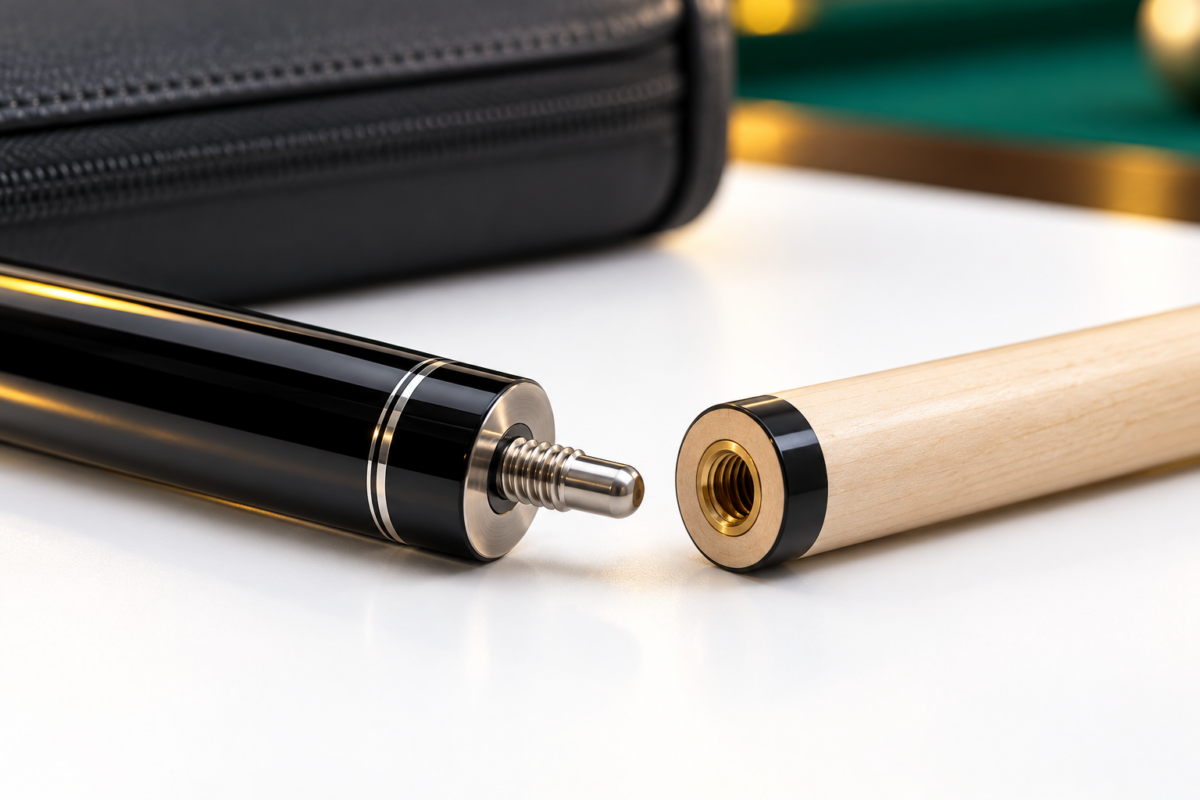
A replacement shaft can be an appealing way to explore a different cue setup while keeping a butt you already enjoy. Before comparing shaft materials, tip sizes, or appearance, however, confirm that the proposed shaft is suitable for your existing cue. Pool cue joint compatibility is a practical requirement, not a detail to resolve after an order arrives.
Players shopping online often encounter similar looking joints and familiar brand names. Neither is enough to establish the correct match. A useful purchase conversation starts with the exact cue, the available manufacturer information, and the particular shaft being considered. Gathering those details early can help you avoid choosing an attractive option that does not fit your equipment.
Identify the cue you actually own
Record the manufacturer, model, and any other identifying information available from the original purchase. If the cue is older or has been modified, mention that as well. A model name remembered approximately may leave important questions unanswered. Keep the information together with photographs so a specialist can review the same details you are using.
Photograph the complete cue and the joint area clearly, without forcing components apart or attempting repairs. Include any identifying marks and explain what is already known. If the model remains uncertain, say so. A straightforward description of the uncertainty is more useful than assigning a joint type because it resembles an example found online.
Understand that joint names describe different systems
Manufacturers offer multiple joint configurations, including threaded joints and proprietary systems. Predator’s compatibility guide lists several pin types and distinguishes Uni-Loc Quick-Release from Radial options. These names should be read precisely. A listing that mentions one configuration should not be treated as interchangeable with another simply because the brand or general appearance is familiar.
Use the manufacturer’s information and a knowledgeable retailer to confirm the relevant configuration for your cue. Do not identify a joint only by counting visible features in a small photograph. If a listing offers several options, make sure the selected option matches the specification being discussed, rather than assuming the product’s main image represents every version.
Look beyond the thread description
Joint fit can involve more than a familiar pin designation. The collar or joint-face dimensions and the way components meet deserve attention. For example, Cuetec lists AVID shafts with the same 3/8 by 14 designation in both 21.30mm and 20.00mm legacy joint versions. Those distinctions belong in the purchase discussion.
This example illustrates why a partial description may be insufficient; it does not establish compatibility for every Cuetec cue or another manufacturer’s product. Provide the exact cue and proposed shaft information for review. Ask whether any visible transition, dimension, or model-specific requirement needs clarification before the shaft is ordered.
Keep shaft preferences separate from fit
Once compatibility is established, compare the playing characteristics and specifications that interest you. Shaft material, tip diameter, length, taper, and supplied tip can all be part of that discussion. A preference for carbon fiber or maple does not answer the joint question. Treat fit as the foundation on which the remaining choices are made.
Explain what you enjoy about the current setup and what you hope to change. Perhaps you want to compare a different shaft feel while preserving a familiar grip. A clear purpose helps narrow the options without assuming that one material or specification is right for everyone. Equipment selection should support a considered decision rather than a promised performance outcome.
Review the exact item before checkout
Check the complete product title, selected joint option, dimensions, and any applicable notes. Confirm whether the listing is for a shaft only, a butt only, or a complete cue. Similar photographs can appear across related products, so the written description matters. Save the relevant information and any compatibility confirmation with your order records.
If the options shown on a page do not clearly match the recommendation you received, pause and ask before purchasing. Do not assume a nearby option is equivalent or that a note added to the order will automatically change the product selected. Clear confirmation before checkout is easier than trying to reconcile a mismatch after delivery.
Build a compatibility checklist for the conversation
Prepare one short list containing the existing cue manufacturer, exact model, known joint designation, available purchase information, and any modifications. Add the proposed replacement shaft’s complete product name and selected variation. Include clear photographs when requested, but do not assume the images replace the written specification. The list should show what is confirmed and what still needs an answer.
Imagine finding two shafts with the same tip diameter and a familiar thread designation. One listing includes a joint-face dimension that differs from the other. Rather than choosing whichever photograph looks closer, bring both descriptions to the retailer and ask which version is appropriate for the identified cue. The unresolved detail becomes a specific question instead of an overlooked assumption.
Keep the response with the product link and review the actual selection again before payment. If a different version is offered because the first is unavailable, repeat the compatibility check for that substitute. Approval of one configuration should not be treated as approval of every shaft in the same family. This approach keeps the purchase focused on a confirmed match. Clear records also make later equipment questions easier to discuss.
Ask about inspection and next steps
Review the current purchase and return terms before using or altering new equipment. Ask the retailer what to check on arrival and how to report a concern. If components do not meet as expected, stop and seek advice. Forcing a joint or modifying it yourself is not a reliable way to establish that the parts are compatible.
Keep the packaging, invoice, product details, and relevant correspondence available until any questions are resolved. Follow the manufacturer’s handling and care guidance for the particular equipment. A new shaft is easier to evaluate when the process begins with an accurate specification and continues with a careful review of the item actually supplied.
The Billiard Store helps players compare cues, shafts, joint types, cases, and accessories. For assistance with a replacement shaft, call (561) 736-7665 or visit TheBilliardStore.com. Have your current cue information ready so the conversation can focus on suitable options and the details that need confirmation before you order.
