
Blog
How to Choose the Right Pool Cue Case
Aug
A pool cue case is more than a carrying bag. It protects precision equipment from impacts, moisture, temperature changes, scratches, dirt, and accidental drops. The right case also keeps shafts, butts, extensions, chalk, gloves, tip tools, and other accessories organized between matches.
Cue cases vary widely in protection, capacity, opening style, weight, storage, and price. A recreational player carrying one cue has different needs from a league player traveling with a playing cue, break cue, jump cue, extra shafts, and maintenance supplies. Choosing the right case begins with understanding what you own and how you travel.
Understand Cue-Case Capacity
Case capacity is commonly described by the number of cue butts and shafts it holds. A 1×1 case holds one butt and one shaft. A 1×2 case holds one butt and two shafts. A 2×4 case generally carries two butts and four shafts.
Count your current equipment and what you may add. One or two extra compartments can accommodate a future shaft or break cue, but an oversized case adds weight and may not secure every component properly.
Jump-cue handles and extensions may require dedicated pockets or longer accessory compartments. Verify the actual internal dimensions instead of assuming every listed capacity accommodates unusual components.
Hard Cases Versus Soft Cases
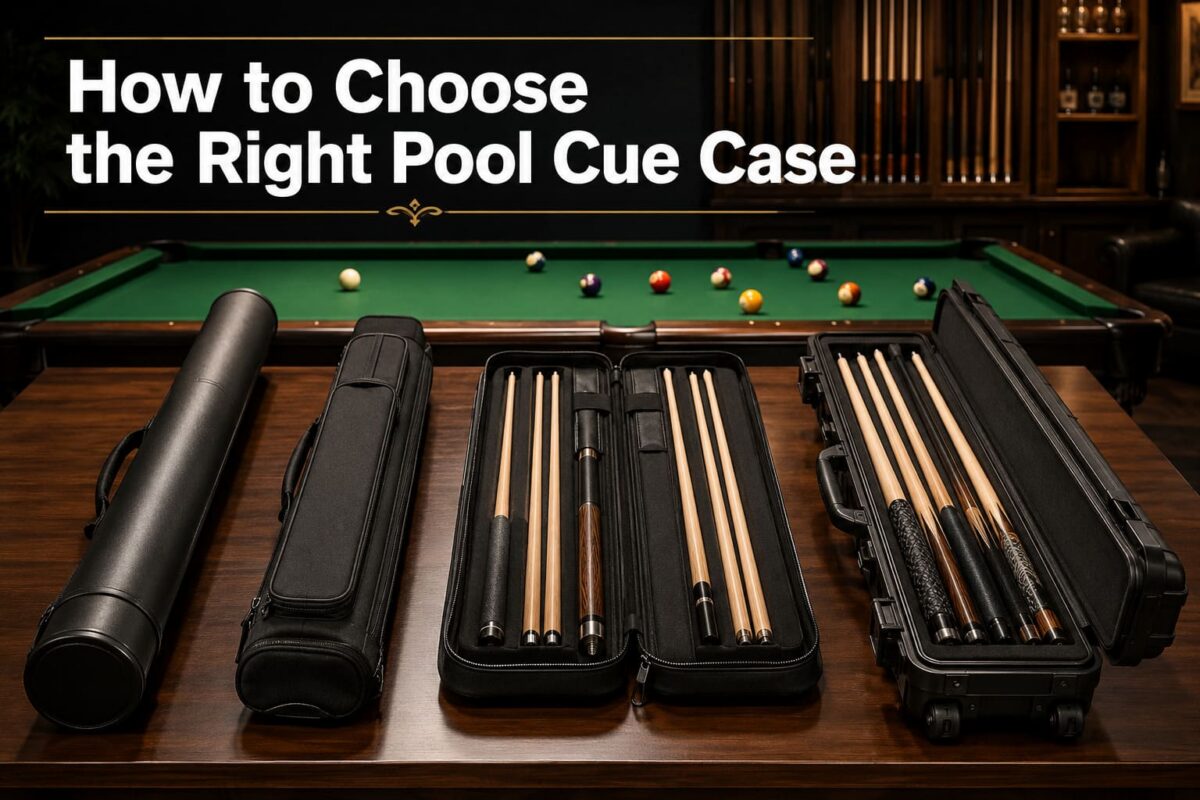
Hard cue cases use a rigid or semi-rigid structure to resist crushing and impact. They are a strong choice for players who travel frequently, place cases in vehicle trunks, or carry expensive cues into crowded venues. Interior tubes or structured channels can keep components separated.
Soft cases are lighter and may be more comfortable for short trips. They can work well when the owner controls how the case is stored and does not need maximum impact protection. Their flexibility may provide more usable pocket space, but the level of shaft and joint protection varies.
Semi-rigid and hybrid cases combine structure with lighter materials. They may offer a useful balance for league players who want protection without the weight of a heavy traditional case.
Butterfly Cases and Book-Style Access
Butterfly cases open flat like a book, allowing the player to see and reach most equipment at once. Cue components are typically held in padded sleeves or zippered sections. This format can provide generous accessory storage and make organization easy.
Traditional top-loading cases use individual tubes or channels. They usually have a smaller footprint when opened and can be convenient beside a chair during league play. The player removes each shaft or butt vertically from the top.
Choose the style that suits your venues. A butterfly case requires room to open fully, while a top-loading case needs overhead clearance. Both can provide strong protection.
Interior Protection and Fit
The interior should keep cue components from striking one another. Look for soft, nonabrasive liners, padded dividers, secure channels, and protection around joint areas. The base should absorb normal setting-down impacts without allowing the cue to hit the floor.
Interior length is critical. Standard cues usually fit standard cases, but cues with joint protectors, longer shafts, extensions, or unusual bumpers may need additional space. Never force a component into a compartment or allow a zipper to press against a shaft or pin.
Accessory Pockets and Organization
At minimum, many players need room for chalk, a glove, cue towel, tip tool, and joint protectors. Competitive players may also carry extensions, bridge heads, replacement accessories, charging cables, scorekeeping supplies, or small personal items.
Long pockets are helpful for jump handles and extensions. Smaller divided pockets prevent chalk and metal tools from rubbing against other accessories. Liquid cleaners should remain tightly sealed and isolated from cue compartments.
More pockets are not automatically better. A heavily loaded exterior can make the case unbalanced. Choose storage that supports the items you actually use.
Straps, Handles, and Carrying Comfort
A cue case may be carried across parking lots, through airports, up stairs, and around tournament venues. Test the handle position and shoulder strap. Wider padded straps can distribute weight more comfortably, and secure attachment points reduce the chance of a failure.
Backpack-style straps may be useful for players carrying other bags. The loaded case should remain balanced and should not tip easily.
Closures, Weather, and Travel
Inspect zippers, latches, buckles, and stitching. Closures should operate smoothly without pressing against the cue. A protective flap over a zipper may reduce dust and light moisture exposure.
Most cue cases should not be treated as waterproof unless the manufacturer specifically says so. Keep the case out of rain, standing water, and extreme heat. Never leave cues in a hot vehicle for extended periods, since temperature and humidity changes can affect wood components and adhesives.
For air travel, review current airline rules and consider a protective travel shell, since checked luggage faces greater impact risk.
Match the Case to the Value of Your Equipment
A case should provide protection appropriate to the cues inside. Players who invest in premium cues and shafts often benefit from stronger structure, better interior separation, durable hardware, and reliable closures.
Appearance still matters. Leather, synthetic materials, molded shells, bright colors, and understated designs allow players to choose a case that reflects their style. Protection and function, however, should come before decoration.
Shop Cue Cases Online
The best case is the one that fits your equipment, travel routine, and future plans. The Billiard Store carries cue cases and accessories for recreational, league, and tournament players, including options from established billiard-equipment categories available online.
Browse cue cases at The Billiard Store or call (561) 736-7665 for help comparing capacity, protection, opening style, and accessory storage. Protecting a cue from the day it is purchased can help preserve its appearance and performance for years.
