
Blog
How to Clean and Maintain a Pool Cue
Sep
A quality pool cue is precision equipment. Chalk, hand oils, moisture, dust, and improper storage can gradually affect its appearance and how smoothly it moves through your bridge hand.
Regular maintenance does not require complicated equipment or aggressive cleaning. In most cases, a clean cloth, suitable cue-care products, and proper storage habits are enough to protect your investment.
However, the correct cleaning method depends on the cue’s materials. Traditional wood shafts and modern carbon-fiber shafts should not always be treated the same way.
This guide explains how to clean and maintain a pool cue without damaging the shaft, finish, tip, ferrule, or joint.
Why Pool Cue Maintenance Matters
A cue comes into contact with chalk, skin, table cloth, and moisture every time it is used. Residue eventually builds up on the shaft and other surfaces.
A dirty shaft may feel sticky or rough as it passes through the bridge hand. Chalk can also become embedded in an unfinished wood shaft, gradually changing its appearance.
Regular maintenance can help:
- Keep the shaft moving smoothly
- Protect the cue’s finish
- Reduce chalk and oil buildup
- Prevent damage to the joint
- Identify tip problems before they become serious
- Reduce exposure to moisture and extreme temperatures
- Extend the useful life of the equipment
Cleaning will not repair a warped or structurally damaged cue, but it can prevent ordinary residue from becoming a larger problem.
What You Need to Clean a Pool Cue
Before starting, gather a few basic supplies:
- A clean microfiber or cue towel
- A cleaner approved for your shaft material
- A separate dry cloth
- A cue-tip shaping or scuffing tool
- Joint protectors
- A protective cue case
Avoid household cleaners, furniture polish, bleach, abrasive powders, and rough cleaning pads. A product that is safe for furniture or another sporting item may damage a cue’s finish.
Always review the cue or shaft manufacturer’s care instructions before applying a cleaning solution.
How to Clean a Wood Pool Cue Shaft
Wood is a natural material that can react to moisture, temperature changes, and abrasive cleaning.
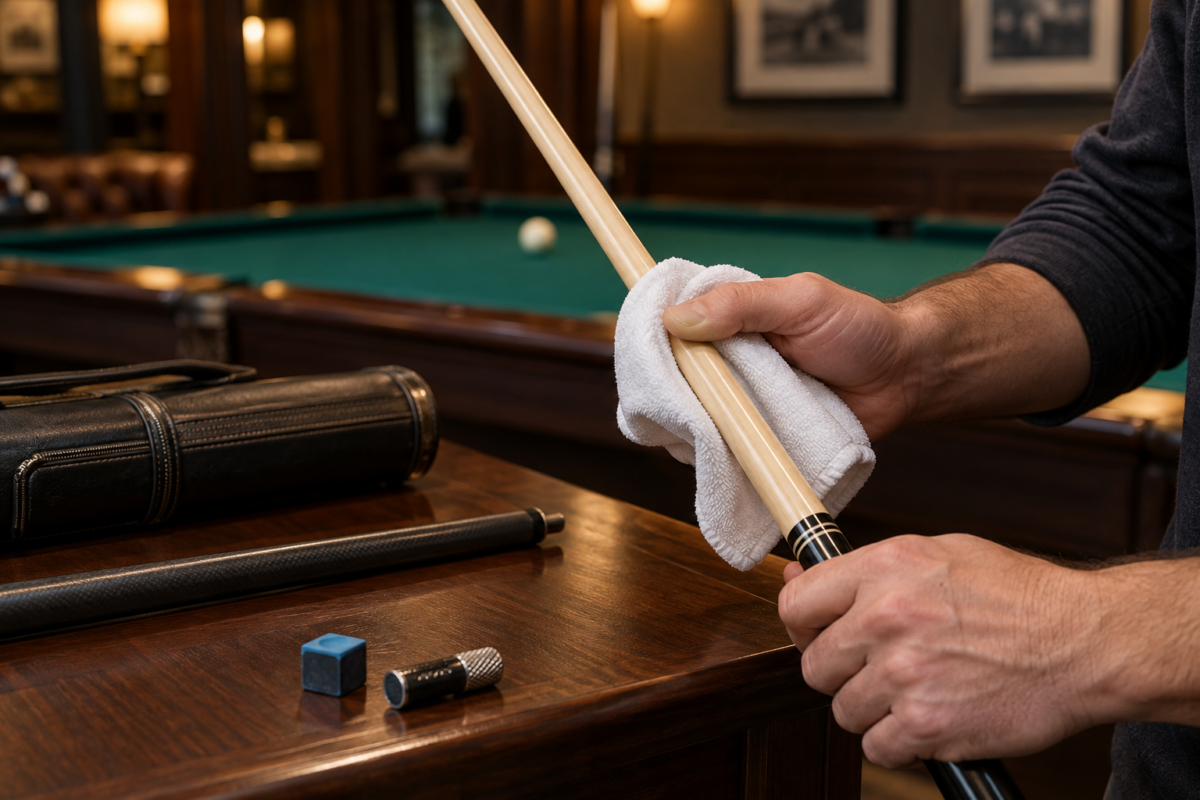
Begin by wiping the shaft with a clean, dry microfiber cloth. Rotate the shaft while wiping from the joint area toward the ferrule. This removes loose chalk, dust, and hand oils.
If residue remains, use a cleaner designed specifically for wood cue shafts. Apply a small amount to the cloth rather than pouring or spraying the product directly onto the shaft.
Wipe the shaft evenly and avoid saturating the wood. Remove any remaining cleaner with a second cloth and allow the shaft to dry completely before placing it in the case.
Some players use burnishing products to create a smoother surface. If you choose to burnish a shaft, follow the product instructions carefully.
Do not repeatedly sand a wood shaft as part of routine cleaning. Sandpaper and aggressive abrasives remove material and can gradually alter the shaft’s diameter, taper, finish, and playing characteristics.
How to Clean a Carbon-Fiber Pool Cue Shaft
Carbon-fiber shafts resist warping and moisture better than traditional wood, but they still collect chalk, oil, and dirt.
Use a clean microfiber cloth after each playing session. For deeper cleaning, use a product approved by the shaft manufacturer. Some manufacturers recommend a lightly dampened cloth or a specific alcohol-based wipe, while others provide their own cleaning products.
Because construction and finishes differ between manufacturers, do not assume that every cleaning method is appropriate for every carbon-fiber shaft.
Never sand a carbon-fiber shaft. Sanding may damage its surface and could affect the manufacturer’s warranty.
After cleaning, dry the shaft thoroughly before returning it to the cue case.
Clean the Cue Butt Carefully
The butt of the cue usually has a protective finish, wrap, or textured gripping area.
For finished surfaces, use a soft, dry cloth to remove fingerprints and residue. If additional cleaning is necessary, use only a product that is safe for the cue’s finish.
Leather wraps, linen wraps, rubber grips, and wrapless cues require different care. Avoid soaking any wrap with liquid. Excess moisture can stain the material, loosen adhesive, or affect how it feels in the hand.
When uncertain, start with a dry cloth and consult the manufacturer or an experienced cue-repair professional.
Inspect and Maintain the Cue Tip
The cue tip directly contacts the cue ball and has a significant effect on play.
Inspect it regularly for:
- Flattening
- Glazing
- Mushrooming around the edges
- Cracks or missing material
- Separation from the ferrule
- Difficulty holding chalk
- Excessive wear
A tip tool can lightly scuff a glazed surface and restore its ability to hold chalk. A shaper can help maintain the desired curvature.
Use these tools sparingly. Removing too much material shortens the tip’s life and can create an uneven shape.
If the tip is extremely thin, loose, cracked, or badly misshapen, professional replacement is usually the safest option.
Protect the Ferrule
The ferrule is the section immediately beneath the cue tip. It helps support the tip and manage impact forces.
Chalk residue can collect around the ferrule, especially when a player chalks aggressively. Wipe it gently with a clean cloth, taking care not to damage the tip.
Avoid harsh chemicals and abrasive methods. Ferrule materials vary, and an aggressive cleaner may discolor or damage the surface.
A cracked or loose ferrule should be inspected by a qualified cue-repair professional.
Keep the Cue Joint Clean
The joint connects the shaft to the butt. Dirt or damage in this area can interfere with a secure connection.
When the cue is disassembled, inspect the pin, threads, inserts, collars, and joint faces. Remove loose dust with a clean, dry cloth.
Do not force a joint that does not screw together smoothly. Cross-threading or overtightening can cause expensive damage.
Install joint protectors whenever the cue is stored. They help protect the pin and shaft insert from impact, dirt, and debris inside the case.
Store the Cue Properly
Storage is one of the most important parts of pool cue maintenance.
Keep the cue in a protective case when it is not being used. Store the case in a climate-controlled location away from direct sunlight, moisture, and extreme heat or cold.
Do not leave a cue in a vehicle. Interior vehicle temperatures can become extreme and may damage wood, adhesives, finishes, tips, and wraps.
Avoid leaning an assembled cue against a wall for extended periods. The cue can fall, and long-term pressure may not support the shaft evenly.
A case should provide enough structure to protect the cue during transportation. Make sure all components are dry before closing the case.
Common Pool Cue Cleaning Mistakes
Several common maintenance habits can do more harm than good:
- Using household cleaning chemicals
- Applying too much liquid to a wood shaft
- Sanding the shaft frequently
- Sanding a carbon-fiber shaft
- Cleaning with a dirty or abrasive cloth
- Soaking the cue wrap
- Forcing or overtightening the joint
- Removing too much material from the tip
- Storing a damp cue inside a closed case
- Leaving the cue in a hot vehicle
When in doubt, choose the least aggressive method and verify the manufacturer’s recommendations.
How Often Should You Clean Your Pool Cue?
Wipe the shaft with a dry microfiber cloth after each playing session. This simple habit can prevent residue from accumulating.
A deeper cleaning schedule depends on how frequently you play, how much chalk you use, the environment, and the shaft material.
League and tournament players may need to clean their equipment more frequently than occasional recreational players. Humid environments can also make a shaft feel sticky sooner.
Inspect the tip, ferrule, joint, and case regularly instead of waiting until performance changes.
Find Pool Cue Maintenance Products and Expert Help
Consistent maintenance can keep your pool cue feeling smooth, protect its appearance, and help prevent avoidable damage.
The Billiard Store carries cue-maintenance supplies, cases, tip tools, towels, gloves, joint protectors, shafts, and other equipment for recreational, league, and tournament players.
Browse the available billiard accessories online or call 561-736-7665 for help choosing cleaning products and accessories that are appropriate for your cue.
A few minutes of routine care after each playing session can help your equipment perform consistently and remain protected for years.
